







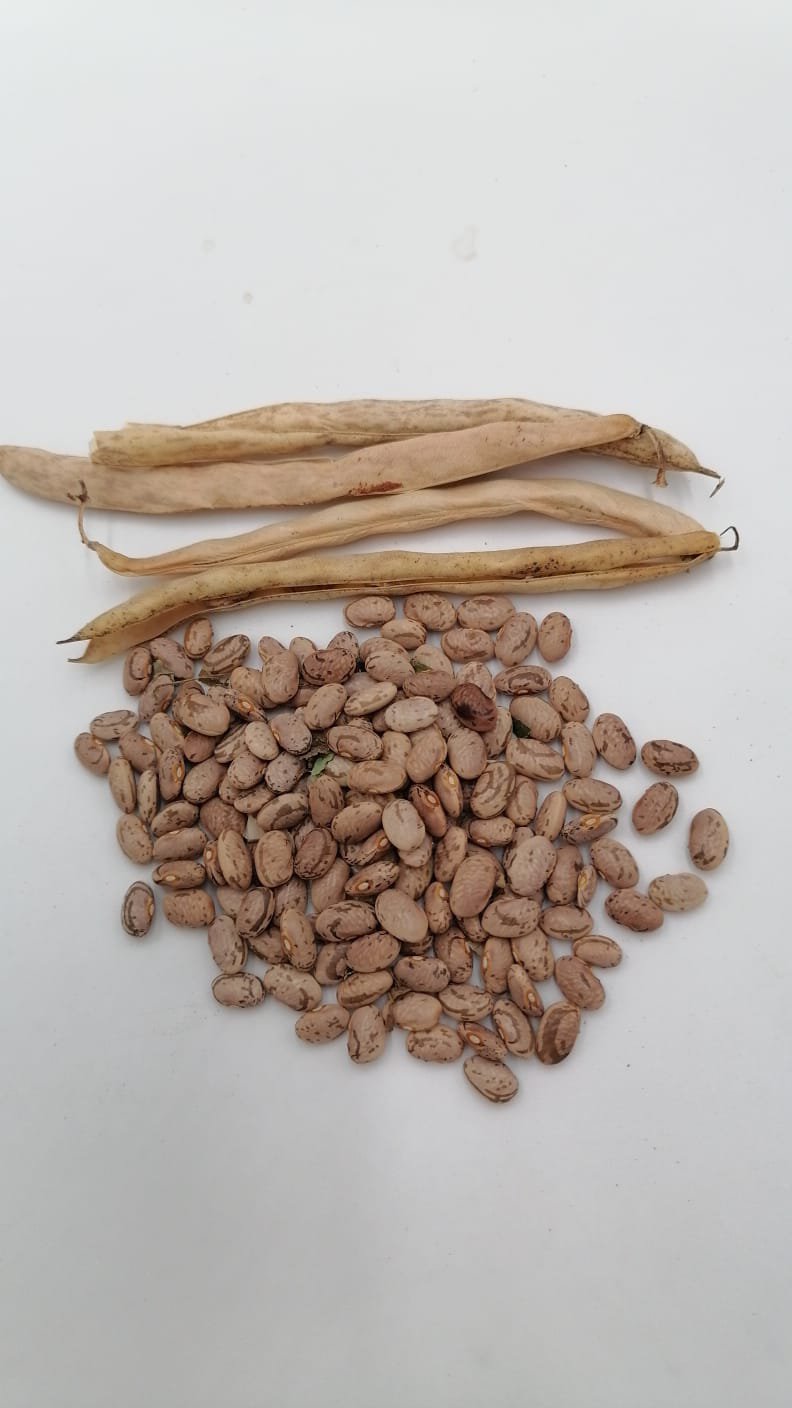
Here are more in-depth details about the Tiger’s Eye Bean, going beyond the basics:
Botanical & Agricultural Info
- Scientific name: Phaseolus vulgaris (same species as kidney, pinto, and black beans)
- Type: Heirloom, open-pollinated variety (not hybrid)
- Growth habit: Bush bean (compact plant, no trellis needed)
- Growing season: Warm-season crop; typically harvested in about 80–90 days
- Yield: Moderate; pods contain 4–6 beans each
Appearance Changes When Cooked
- Raw beans: glossy cream background with reddish-brown swirls
- Cooked beans: lose much of their pattern, turning a uniform light brown or golden color
- Skins become very thin and tender—one reason they’re prized for smooth dishes
Flavor Profile (More Detailed)
- Mildly sweet and earthy
- Often described as having hints of:
- Chestnut
- Hazelnut
- Light umami richness
- Less “beany” taste compared to darker beans like kidney or black beans
Best Cooking Techniques
- Simmering (preferred): Keeps beans intact and creamy
- Pressure cooking: Faster (about 25–30 minutes, no soak)
- Slow cooking: Ideal for stews; absorbs flavors well
💡 Tip: Add salt toward the end of cooking to avoid slightly tough skins.
Flavor Pairings
Works especially well with:
- Garlic, onions, shallots
- Olive oil or butter
- Herbs: rosemary, thyme, bay leaf
- Meats: pork, sausage, bacon
- Vegetables: tomatoes, carrots, spinach
Culinary Uses Around the World
- South America: Traditional rustic bean stews
- Europe (modern cuisine): Used in gourmet soups and purées
- Vegetarian cooking: Popular as a creamy base for plant-based dishes
🥗 Nutrition (Expanded)
Per cooked cup (approximate):
- Calories: ~200–230 kcal
- Protein: ~13–15 g
- Fiber: ~8–10 g
Additional benefits:
- Supports digestion (high fiber)
- Helps regulate blood sugar (low glycemic index)
- Naturally low in fat and cholesterol-free
Reviews
Clear filtersThere are no reviews yet.