



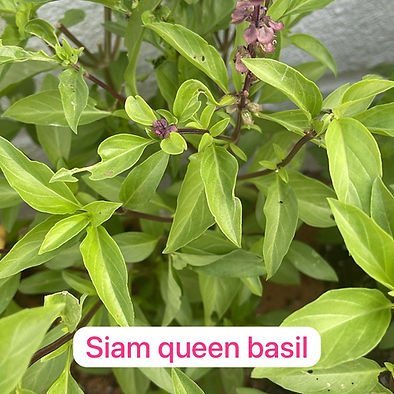
Siam Queen Basil (Ocimum basilicum ‘Siam Queen’)
Siam Queen Basil is an improved Thai basil variety recognized for its large aromatic green leaves, distinctive purple stems, beautiful purple flower clusters, and strong anise-licorice flavor.
It is valued as both a culinary herb and an ornamental plant. It is also a 1997 All-America Selections (AAS) award winner.
Characteristic :Details
Common Name :Siam Queen Basil
Botanical Name: Ocimum basilicum ‘Siam Queen’
Family: Lamiaceae
Plant Type :Aromatic herb
Life Cycle: Annual or short-lived perennial in tropical climates
Origin Cultivated: Thai basil selection
Mature Height: 45–90 cm
Mature Spread: 25–40 cm
Growth Habit :Upright, bushy, branching
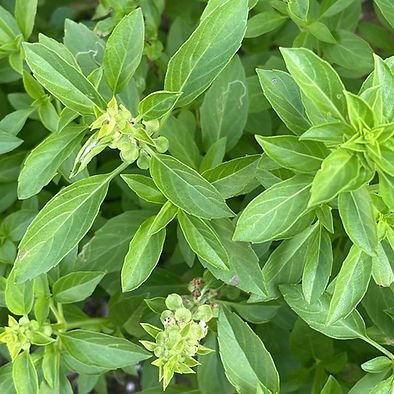
Leaf Color :Medium to olive green
Stem Color :Purple to dark purple
Flower Color: Deep pinkish-purple
Leaf Shape: Oval to elongated, pointed
Fragrance :Strong, spicy, licorice-like
Culinary Use :Thai and Southeast Asian cuisine
Ornamental Use :Herb gardens and containers
Distinctive Characteristics
A. Foliage
- Produces relatively large, medium-green leaves.
- Leaves have slightly serrated margins.
- Strong aromatic fragrance.
- Distinctive anise or licorice flavor with spicy undertones.
B. Stems
- Attractive purple stems.
- Upright and branching growth.
- Produces multiple harvestable shoots.
C. Flowers
- Produces attractive pinkish-purple to deep purple flowers.
- Flowers develop in dense clusters.
- Attracts bees and other pollinators.
- Flower clusters provide additional ornamental value.
Propagation
Siam Queen Basil is commonly propagated through seeds.
Seed propagation procedure:
- Prepare a clean, well-draining seed-starting medium.
- Sow seeds approximately 3–5 mm deep.
- Lightly cover with growing medium.
- Maintain consistent moisture.
- Provide temperatures around 20–25°C.
- Germination generally occurs within 5–14 days.
- Transplant when seedlings have developed several true leaves.
Avoid excessive watering because young basil seedlings are susceptible to damping-off.
Maintenance and Care
- Provide sufficient sunlight for vigorous growth.
- Water regularly, especially during hot weather.
- Pinch the growing tips to encourage branching.
- Remove flower buds if the primary objective is leaf production.
- Apply moderate fertilizer.
- Harvest mature leaves regularly.
- Maintain good air circulation.
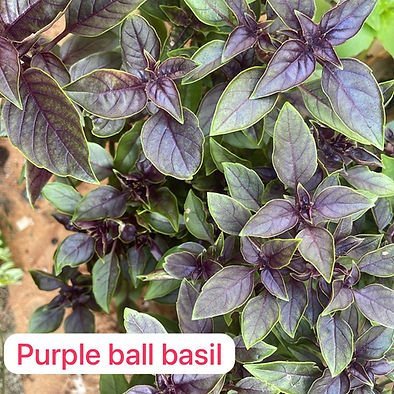
Important: Siam Queen Basil is naturally more upright and larger-growing than compact ornamental varieties such as Purple Ball Basil.
Culinary Uses
Siam Queen Basil is particularly suitable for Southeast Asian cooking.
Common applications include:
- Thai curries
- Stir-fried dishes
- Vietnamese cuisine
- Soups
- Noodle dishes
- Fresh salads
- Sauces and marinades
- Herbal vinegar
Reviews
Clear filtersThere are no reviews yet.